

Chancery Notice
Ucapan Selamat Hari Merdeka dan Hari Malaysia CFM 2026 Hari Merdeka menandakan kebebasan kita daripada pemerintahan penjajah serta perjalanan kita menuju pembentukan sebuah negara yang berdaulat. Hari Malaysia pula menandakan detik apabila Malaya, Sabah dan Sarawak bergabung untuk membentuk sebuah negara baharu yang dikenali sebagai Malaysia. Daripada pembentukan ini lahirlah satu identiti bersama. Tanpa mengira kaum, agama atau latar belakang sejarah, kita semua adalah rakyat Malaysia — satu bangsa, yang disatukan sebagai satu negara. Identiti bersama ini menyeru kita untuk membina sebuah masyarakat yang bersatu demi kebaikan bersama seluruh rakyat Malaysia. Kita diamanahkan dengan kepelbagaian yang kaya, ikatan sosial yang kukuh serta sumber alam dan kekayaan negara yang melimpah — semuanya perlu kita urus dan pelihara demi kemakmuran, kesejahteraan dan kehidupan yang berkembang maju bagi setiap insan di negara ini. Perpaduan tidak bermaksud keseragaman; sebaliknya, ia adalah perpaduan dalam kepelbagaian. Kekuatan kita terletak pada keupayaan untuk saling menghormati, meraikan perbezaan dan bekerjasama antara satu sama lain, sambil terus berpegang pada identiti, budaya dan kepercayaan masing-masing. Inilah yang menjadikan Malaysia sebuah negara yang istimewa. Janganlah kita menganggap remeh berkat keunikan negara kita ini. Apa yang telah dikurniakan kepada kita dari syurga boleh hilang sekiranya kita gagal menghargai dan memeliharanya. Kita mesti sentiasa berwaspada terhadap unsur-unsur yang memecahbelahkan, pandangan yang sempit serta ideologi ekstrem yang berusaha untuk meretakkan perpaduan kita dan mengancam masa depan yang kita kongsi bersama. Sempena kita menandakan satu lagi detik penting dalam perjalanan sebagai sebuah negara yang merdeka, marilah kita dengan bangga mengibarkan Jalur Gemilang — lambang yang menyatukan kita — di rumah, tempat kerja dan rumah-rumah ibadat. Semoga kita terus melangkah bersama-sama, berganding bahu dengan sesama rakyat Malaysia dalam membina sebuah negara yang berteraskan saling menghormati, perpaduan, keadilan dan keamanan. Persekutuan Kristian Malaysia (CFM) mengucapkan kepada seluruh rakyat Malaysia Selamat Hari Merdeka dan Selamat Hari Malaysia yang penuh berkat dan bermakna. Selamat Hari Merdeka & Selamat Hari Malaysia!
In preparation for the Malaysia Pastoral Assembly 2026, Archbishop Julian Leow calls upon all the faithful to observe a Day of Fast and Prayer on 4 September 2026. All Catholics are encouraged to offer personal acts of prayer and fasting for this ecclesial gathering. Parishes are likewise invited to organise prayer vigils, holy hours, rosary prayer, and other communal moments of intercession, so that our entire Archdiocese may unite in seeking the guidance of the Holy Spirit for this important ecclesial moment. Archbishop Julian Leow also invites you to join him online in praying before the Blessed Sacrament on the same day, from 9.00 pm to 10.00 pm, as we gather in faith and hope before the Lord. May our shared prayer strengthen the Church in Malaysia and open our hearts to God’s will. Rev Fr Dr Clarence Devadass Chancellor Archdiocese of Kuala Lumpur
Upon the recommendation of the seminary formators and following consultation with the College of Consultors, Archbishop Julian Leow, D.D., intends to call Bro. Lincoln Lee Keng Chuan, Bro. Joseph Tan Yee Ping, Bro. Tony Bingkuan, OFM Cap., and Bro. Albert Arputhan a/l Maniam to the Order of Deacon on Wednesday, 16 September 2026, at 10:00 am at the Church of the Divine Mercy, Shah Alam, Selangor. Bro. Lincoln Lee Keng Chuan hails from the Church of the Assumption, Petaling Jaya, and currently resides at the Church of the Sacred Heart, Bentong, Pahang. He began his formation in Philosophy at College General, Penang (2019–2020), and continued his theological studies at St Peter’s College, Kuching, Sarawak (2022–2026). Bro. Joseph Tan Yee Ping is from the Church of the Sacred Heart of Jesus, Jalan Peel, Kuala Lumpur, and currently resides at the Church of the Good Shepherd, Setapak, Kuala Lumpur. He began his formation in Philosophy at College General, Penang (2020–2021), and continued his theological formation at St Peter’s College, Kuching, Sarawak (2022–2026). Bro. Tony Bingkuan, OFM Cap., hails from the Church of St Michael, Penampang, Sabah, and currently resides and serves at the Gethsemani Friary at the Church of St Francis of Assisi, Cheras, Selangor. He began his formation in Philosophy at St Peter’s College, Kuching, Sarawak (2010–2011), and subsequently pursued his theological formation at Divine Word Seminary, Tagaytay, Philippines (2018–2019 and 2022–2023). Bro. Albert Arputhan a/l Maniam is from the Church of St Anne, Port Klang. He began his formation in Philosophy at College General, Penang (2017–2018). He then continued his formation at St Peter’s College, Kuching, Sarawak (2020–2021), and completed his theological studies at The National Seminary of Our Lady of Lanka, Kandy, Sri Lanka (2024–2026). In accordance with Canon 1051 §2, this announcement serves as a public notice concerning the suitability of the above candidates for ordination. If anyone is aware of any canonical impediment or other serious reason why any of these candidates should not be ordained, they are requested to inform their parish priest, the Chancery, or the Archbishop without delay, in accordance with Canon 1043. Any such information may be communicated to the Chancery at chancery@archkl.org Let us accompany these candidates with our prayers and support as they prepare for diaconal ministry and service to the People of God. May the Lord strengthen them in their vocation, deepen their love for Christ and His Church, and grant them generous hearts for faithful service in the Archdiocese of Kuala Lumpur.
The Church of the Assumption in Petaling Jaya hosted its first Tamil Life in the Spirit Seminar, an event collaboratively organised with the Church of Divine Mercy, Shah Alam. This three-day seminar attracted nearly 40 participants from both parishes. Clergy members, including Fathers Leonard Lexson, George Harrison, Peter Anthoney, and Deacon Albert Arputhan, joined lay leaders in delivering enriching talks that explored Divine Love, Redemption, and Transformation. Throughout the gathering, attendees were guided towards a renewal of faith through vibrant praise and worship, inner healing sessions, periods of reflection, confession, and Holy Mass. The organising committee extends its gratitude to all contributing priests, speakers, and musicians for making this event a success. The seminar concluded with joyful thanksgiving, believing it had empowered participants to live out their faith actively with courage and commitment.
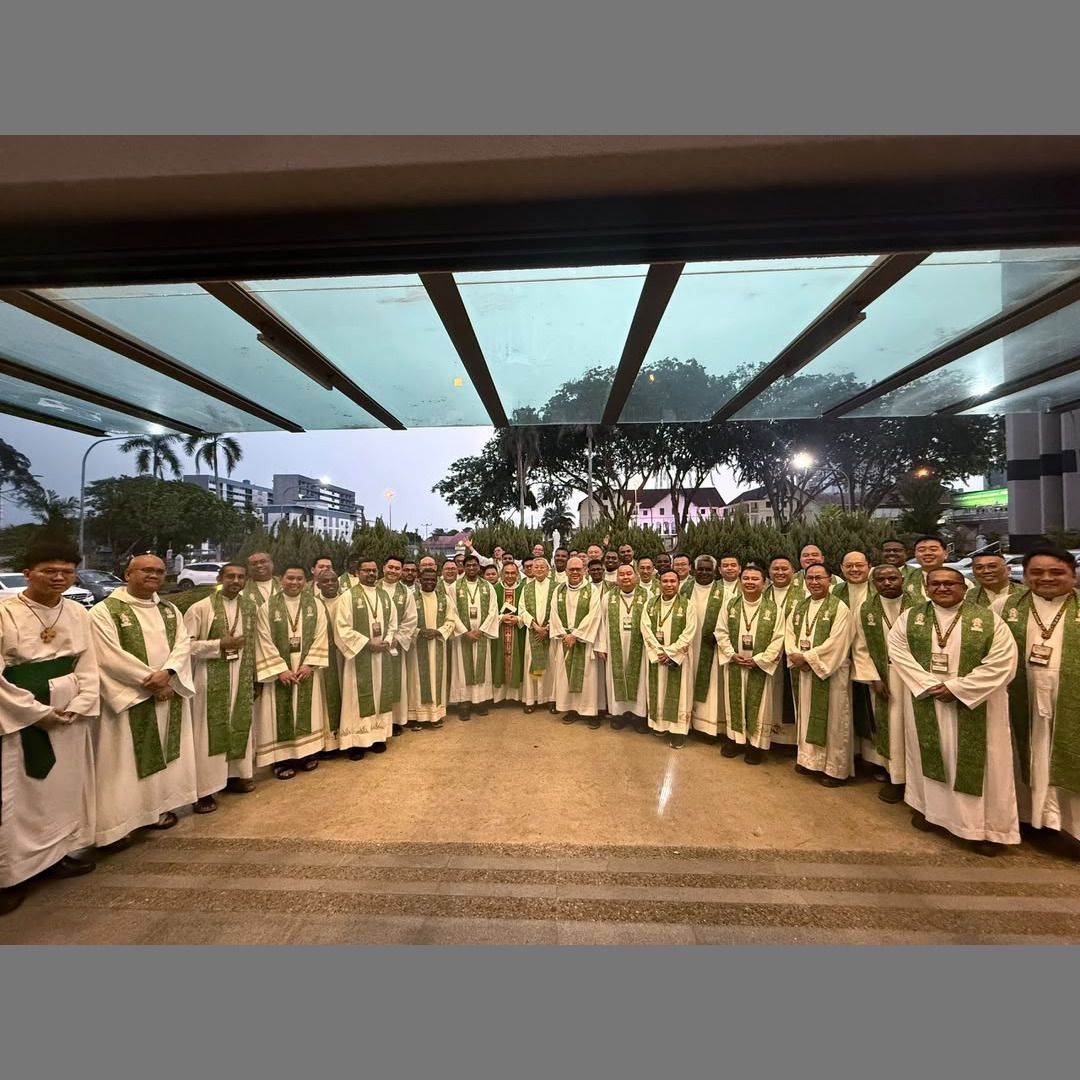
This year, the Archdiocese of Kuching is hosting the Young Priest Gathering (YPG) from 5–9 October. A total of 51 priests from Malaysia (Peninsular, Sabah and Sarawak) and Singapore have assembled for the event. The Archdiocese of Kuala Lumpur is represented by Fathers Bonaventure Rayappan, Gnana Selvam Berentis, Jonathan Andrew Rao, Philip Asirwalam, and Anthony Robert Peter. The YPG was established by the Catholic Bishops' Conference of Malaysia, Singapore and Brunei to provide ongoing formation for priests ordained five years ago or less. It offers a valuable platform for priests from different dioceses to foster fraternity, networking and collaboration. Additionally, it provides first-hand experience of the unique settings and landscapes of the local churches in the region, including their diverse cultures and nationalities, particularly those of missionaries from Africa and India. The gathering also allows priests a brief respite from the routines of their priestly ministry. The four-day programme includes two talks: "Life Experiences as a Young Priest – Its Struggles and Joys" and "Put Out into the Deep". Other activities comprise Conversation in the Spirit (CIS), communal praying of the Divine Office, participation in Holy Masses and Holy Hour, visits to local attractions, and shared meal fellowships. The Archdiocese of Singapore will host the YPG in 2027, with the Archdiocese of Kuala Lumpur following in 2031.
Over 1,500 migrants and local residents gathered at the Church of St Joseph in Sentul to commemorate the 112th World Day of Migrants and Refugees. The Archdiocese of Kuala Lumpur Migrant Ministry organised the event, which commenced with a solemn multilingual Mass. Archbishop Julian Leow presided over the service, joined by clergy, representatives from UNHCR, and diplomatic guests. Guided by the theme "Even Just One of These Children," the celebration fostered unity through the rich tapestry of cultural heritage and fellowship. Attendees enjoyed traditional food stalls, a symbolic dove release, awards for traditional dress, and vibrant dance performances. A central highlight was the "Migrants Got Talent" showcase, where the Myanmar group secured the 2026 championship title. Performers from Sri Lanka and the Philippines were awarded second and third place, respectively. Filled with music, shared stories, and lucky draws, the day beautifully reflected a collective commitment to welcoming every culture as one family.